
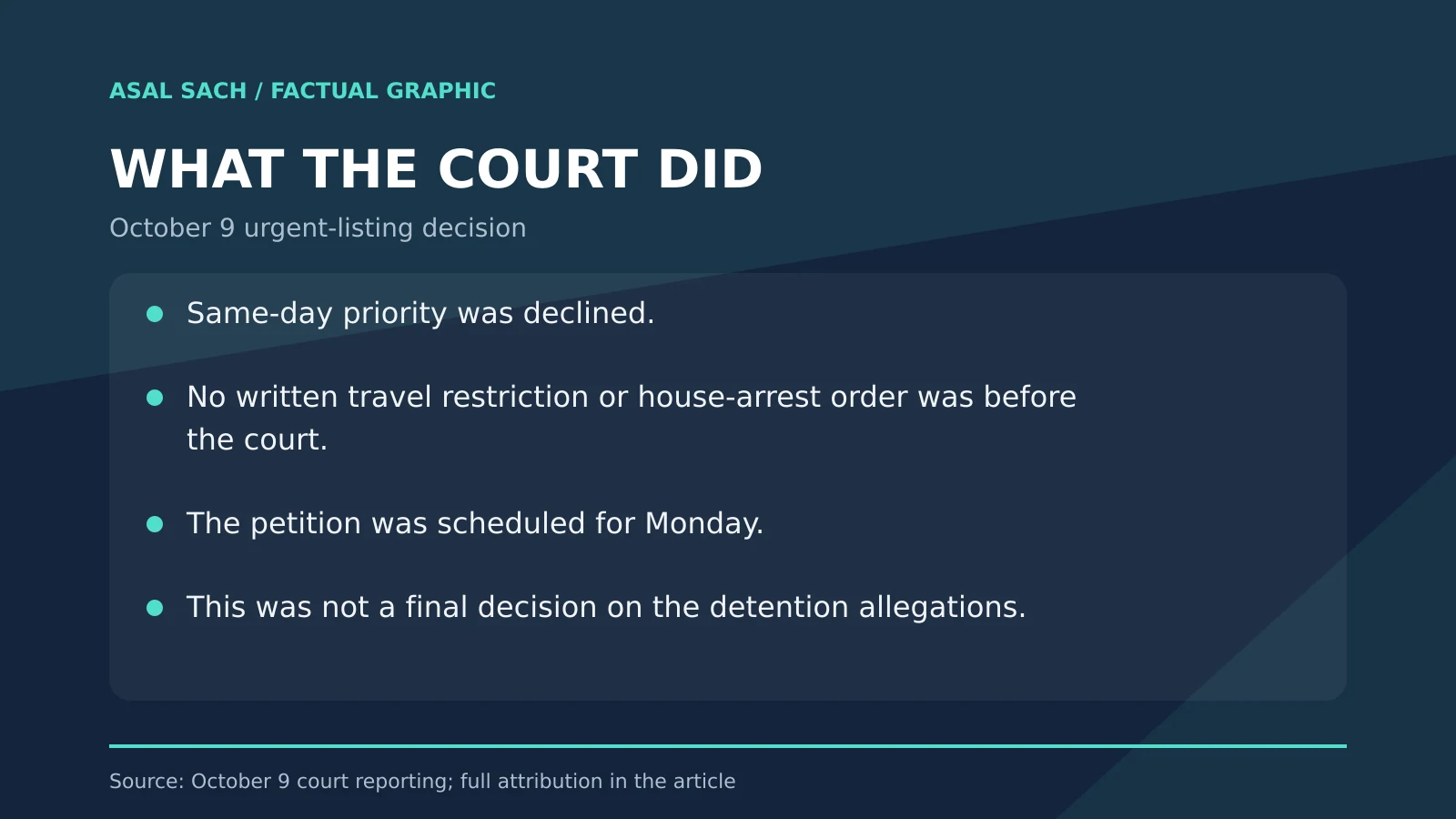
The Delhi High Court on October 9 declined to give immediate priority to a petition by civil-rights activist Nadeem Khan, who said police had orally warned that he could be detained and kept under house arrest until October 10. Acting Chief Justice Nitin Wasudeo Sambre said there was no written communication stopping Khan from travelling or directing house arrest and listed the matter for Monday. The court’s decision concerned urgent listing; it was not a final ruling on the lawfulness of any past or possible detention.
Khan, president of the Association for Protection of Civil Rights, told the court through counsel that he was not planning to join the October 10 protest against the Special Intensive Revision of electoral rolls and had a personal flight to Kolkata. His lawyer argued that an oral warning of possible detention was preventing that travel. These details come from Khan’s petition and counsel’s submissions; the available reports do not establish that police actually detained or confined him on October 9.
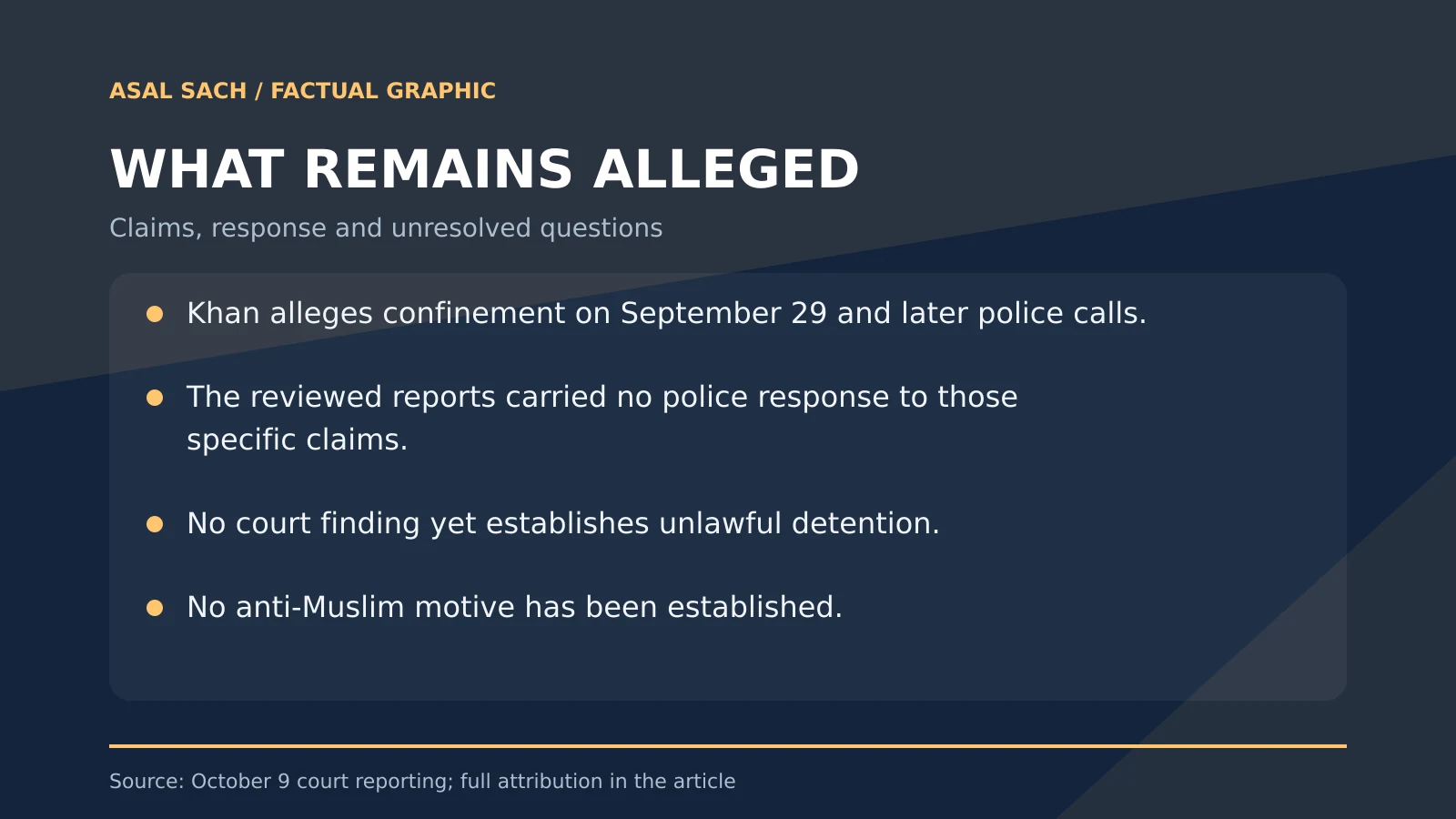
The petition also alleges that Shaheen Bagh police officers confined Khan at the Jamaat-e-Islami Hind office from about 9:30 a.m. to 5:30 p.m. on September 29 without arrest, written grounds or production before a magistrate. It further alleges that police called or monitored him around protests on October 2 and October 5. These are allegations before the court, not judicial findings, and the reports reviewed for this article did not include a Delhi Police response to those specific claims.
Indian Express reported that the judge asked who had stopped Khan from travelling and said a court order could not be based only on a reported phone call when there was no written restriction. LiveLaw separately reported the filing and Khan’s challenge to the alleged September 29 confinement. Neither account reported that the court rejected the petition on its merits; the petition remains scheduled for hearing on Monday.
The High Court also declined immediate listing of a separate Indian Youth Congress petition challenging Delhi Police’s refusal to permit a multi-day Jantar Mantar protest. The police communication cited law-and-order and traffic concerns, as well as guidelines limiting demonstrations in the area. That written permission dispute is separate from Khan’s claim about threatened detention, even though both arose around protests over the voter-roll revision.
This is a civil-liberties and due-process report about alleged preventive police action, freedom of movement and access to urgent judicial protection. Khan’s name or presumed identity is not evidence of religious targeting, and the available reporting does not establish an anti-Muslim motive. The verified new development is limited: the court refused same-day priority, noted the absence of a written restriction and scheduled the petition for Monday.