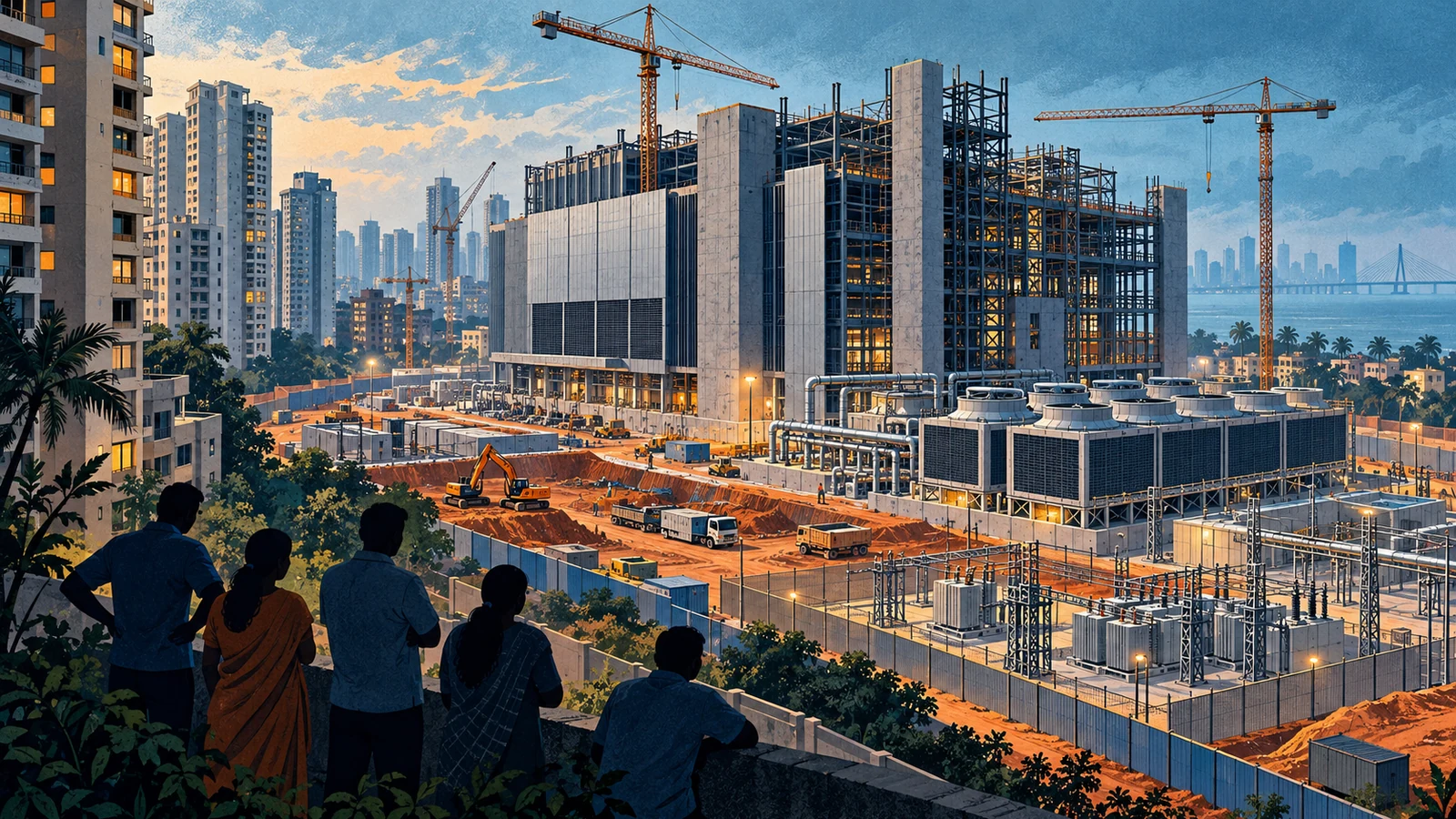
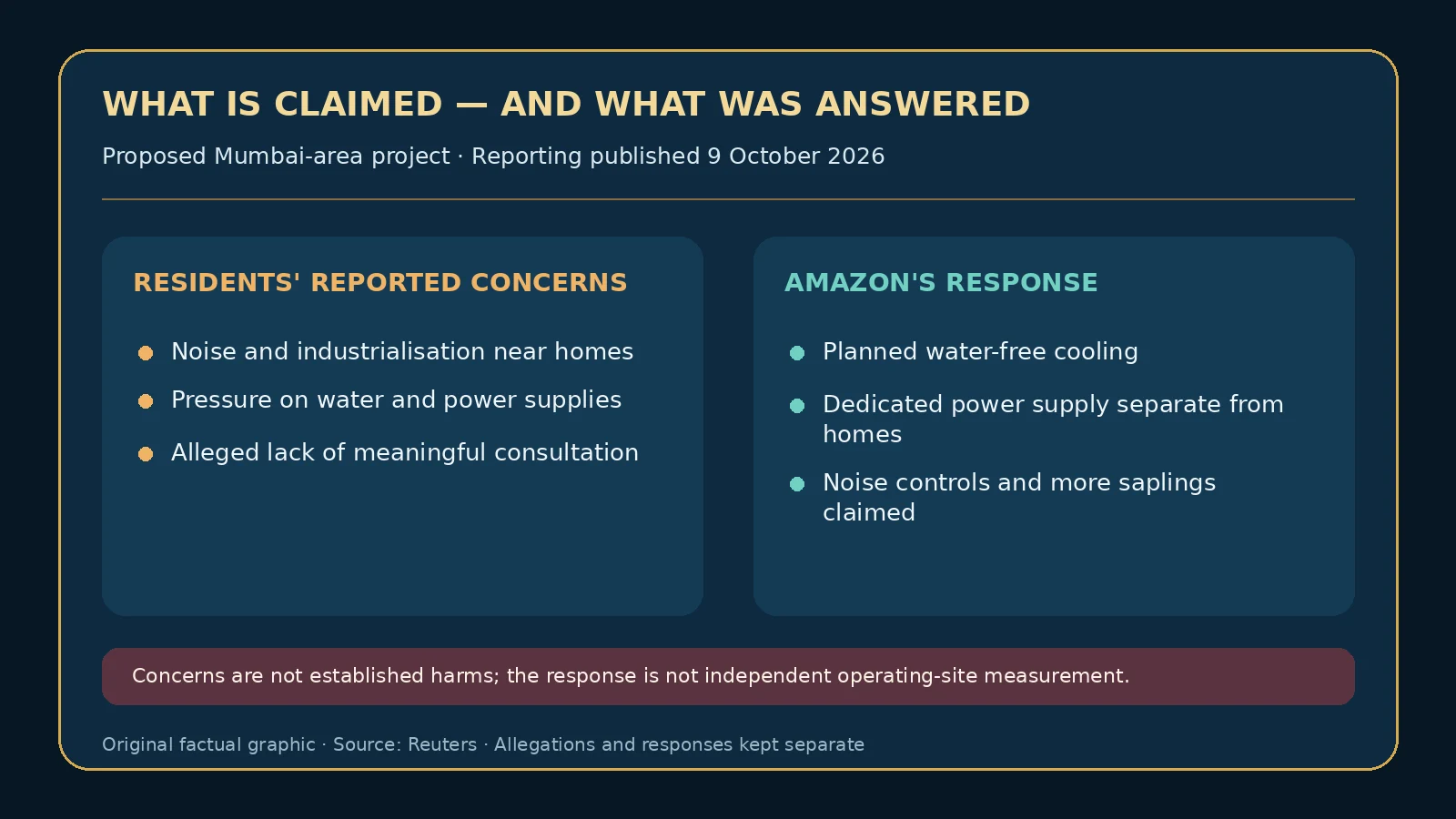
Reuters reported on October 9 that residents living near a planned 54-acre Amazon data-centre facility outside Mumbai are pressing for the project to be moved. Its investigation drew on interviews with more than two dozen residents and a review of official correspondence. Residents said they feared noise, pressure on water and electricity supplies, and further industrialisation beside their homes; more than 1,000 also said meaningful consultation had not occurred. These are reported concerns and allegations, not findings that the facility has already caused those harms.
Amazon told Reuters that the facility would use water-free cooling, receive power from a dedicated supply separate from homes and include noise-mitigation measures. The company also said it planted more saplings than the number of trees removed. Local authorities defended the project on similar utility grounds, while the Union electronics ministry, Prime Minister’s Office and Maharashtra chief minister’s office did not respond to Reuters’ requests for comment. The company’s assurances describe its planned design and mitigation; they are not measurements from an operating site.
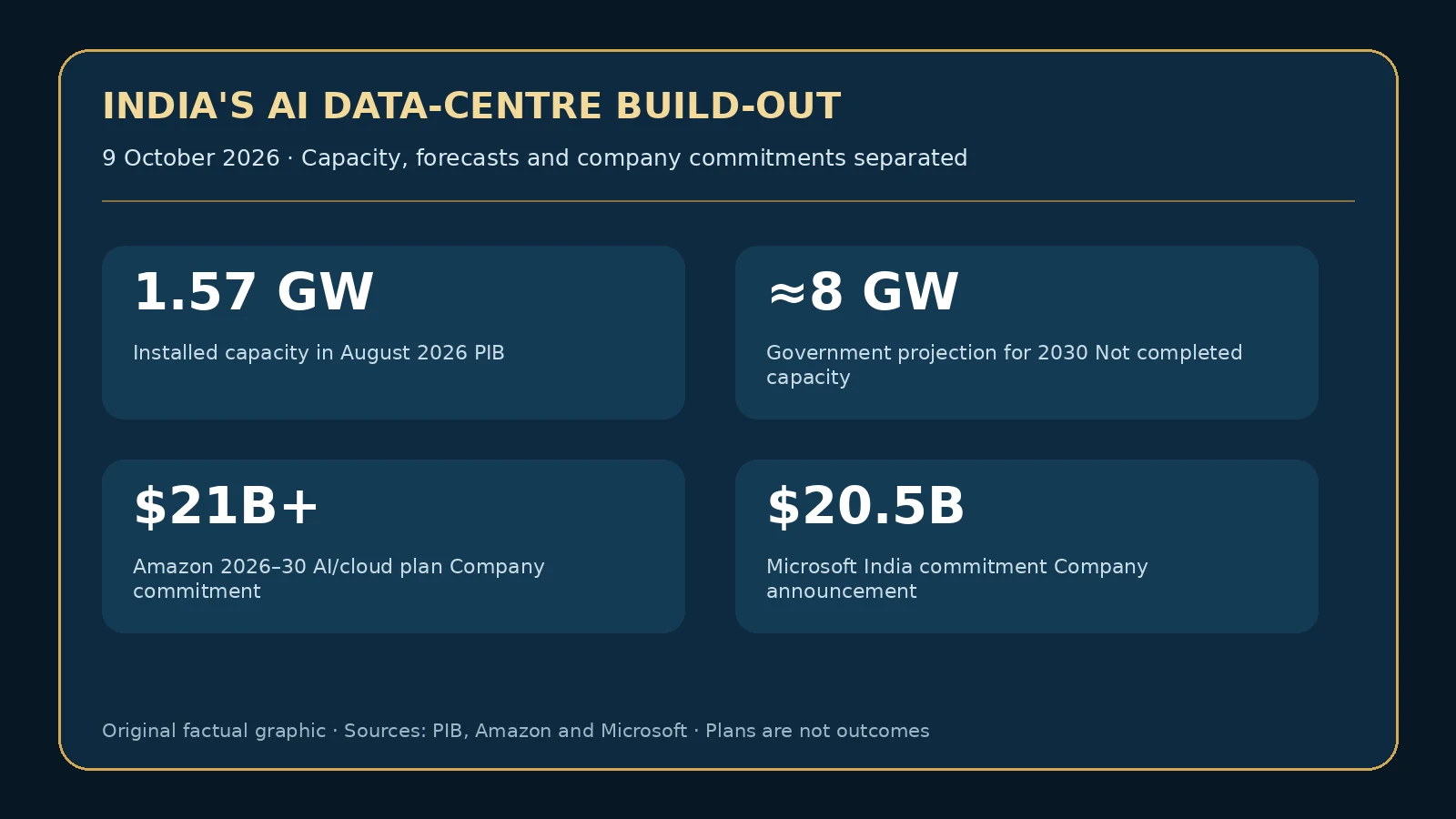
The project forms part of Amazon’s stated plan to invest more than $21 billion in AI and cloud infrastructure in India between 2026 and 2030. Amazon’s own announcement says the spending is intended to expand data-centre capacity in Mumbai and Hyderabad. Microsoft separately says its $20.5 billion India commitment includes a live Hyderabad cloud region designed for advanced AI workloads. These figures are company commitments and planned investment, not proof that every facility or dollar has already been delivered.
A September 14 Press Information Bureau backgrounder put India’s installed data-centre power capacity at 1.57 gigawatts as of August 2026 and projected nearly 8 gigawatts by 2030. It said about $70 billion of investment was underway and another $90 billion had been announced. A March parliamentary response estimated data-centre electricity demand could reach 13.56 gigawatts by 2031–32 and said the industry was adopting cooling technologies intended to reduce water use. Those capacity, demand and investment figures include projections and announcements rather than only completed assets.
Reuters cited research-firm estimates that Indian data centres used about 150 billion litres of water in 2025 and could use more than twice that amount by 2030. It also cited an S&P Global estimate that 60% to 80% of Indian data centres could face high water stress during this decade. Such estimates depend on project location, cooling design, utilisation and methodology; they should not be read as measured consumption for the disputed Mumbai-area facility.
The dispute reflects a broader policy tension: India wants more domestic computing capacity for AI and digital services, while residents and environmental groups are asking how projects will affect neighbourhoods, water, power and land. Reuters also reported objections to Google’s planned $15 billion Andhra Pradesh data-centre project; Google and the state deny wrongdoing. The verified development is the growing, documented opposition and the scale of announced investment—not a judicial finding that the projects are unlawful or a confirmed forecast that local utilities will fail.