
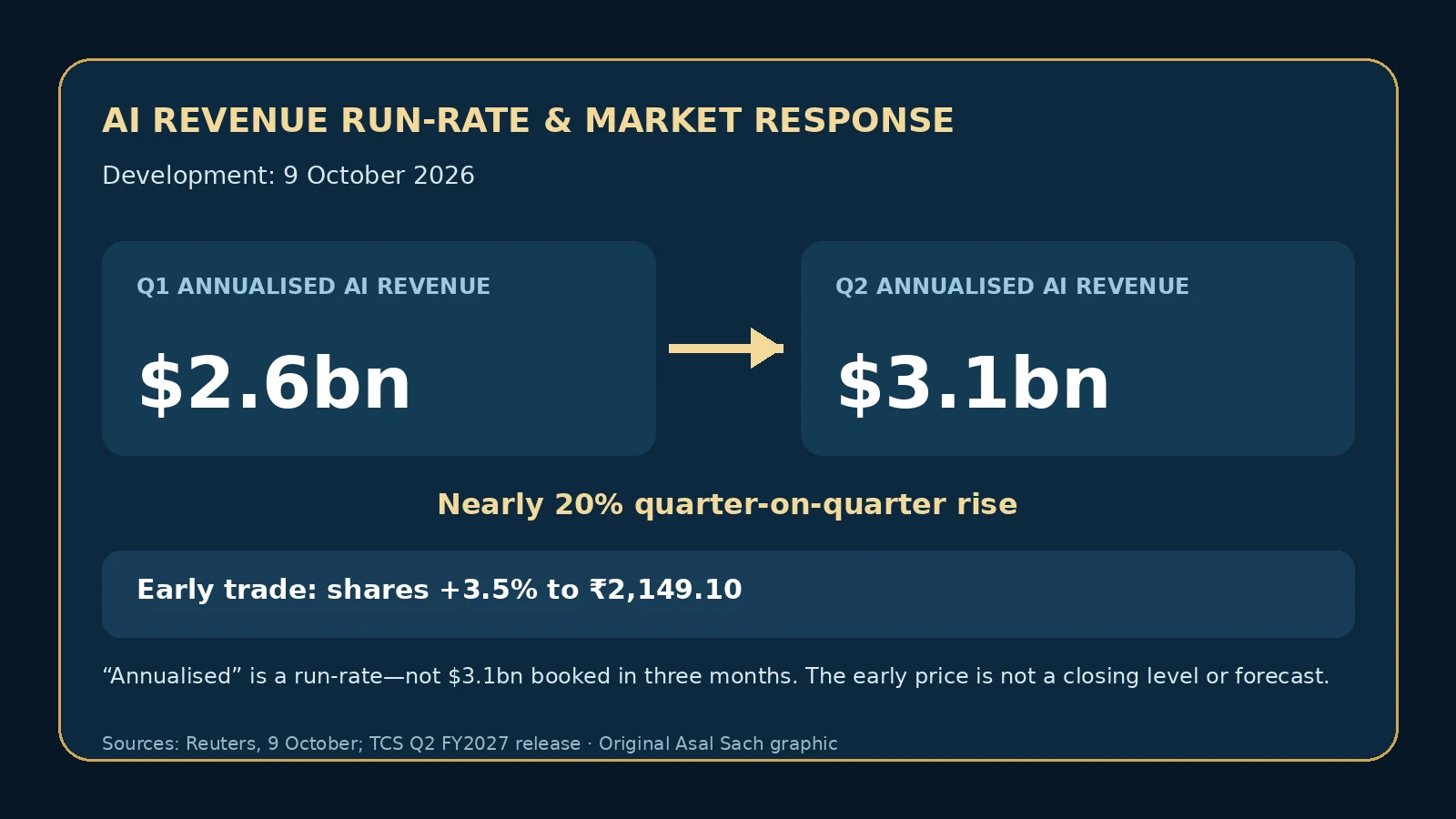
Tata Consultancy Services shares rose 3.5% to ₹2,149.10 in early trading on October 9, Reuters reported, after investors reviewed the company’s July–September results. The price is a market snapshot from early trade, not a closing price or a guarantee of future performance.
TCS said its annualised AI revenue reached $3.1 billion in the second quarter of its 2026–27 financial year, up from $2.6 billion in the previous quarter. Reuters calculated the sequential increase at nearly 20%. “Annualised” describes the reported run-rate; it should not be read as $3.1 billion of AI revenue booked during the three-month quarter.
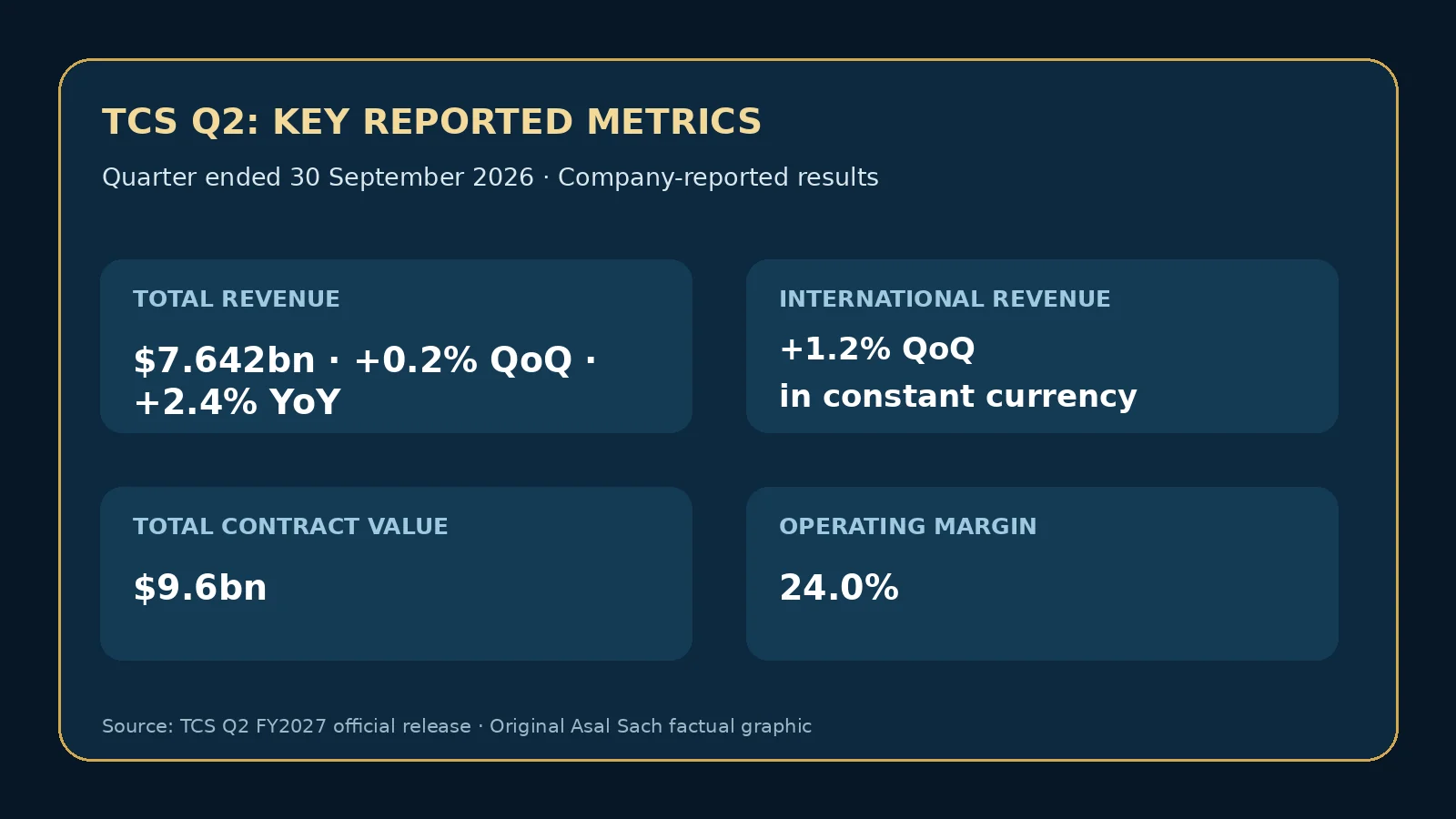
The company’s official release put total quarterly revenue at $7.642 billion, up 0.2% from the previous quarter and 2.4% from a year earlier in US-dollar terms. International revenue grew 1.2% quarter-on-quarter in constant currency. TCS identified banking, financial services and insurance, manufacturing, and technology and services as the leading growth segments.
TCS also reported $9.6 billion in total contract value, a 24.0% operating margin and net profit of $1.45 billion, equal to a 19.0% net margin. These are company-reported consolidated results for the quarter ended September 30; they do not by themselves establish how much future contract value will become recognised revenue.
The results arrived while Indian technology-services companies face uncertainty over US labour and immigration rules. Reuters noted that the US government had suspended participation in the Permanent Labor Certification programme for several IT-services firms, including TCS. That policy context is separate from the company’s reported AI run-rate and does not explain the share move on its own.
The verified development is a fresh market response to TCS’s disclosed quarter: AI-related annualised revenue increased sharply, international business grew sequentially and the share price rose in early trade. The company release is the primary source for the financial figures; Reuters independently reported the market reaction. Neither source turns the early gain or annualised AI run-rate into a forecast.