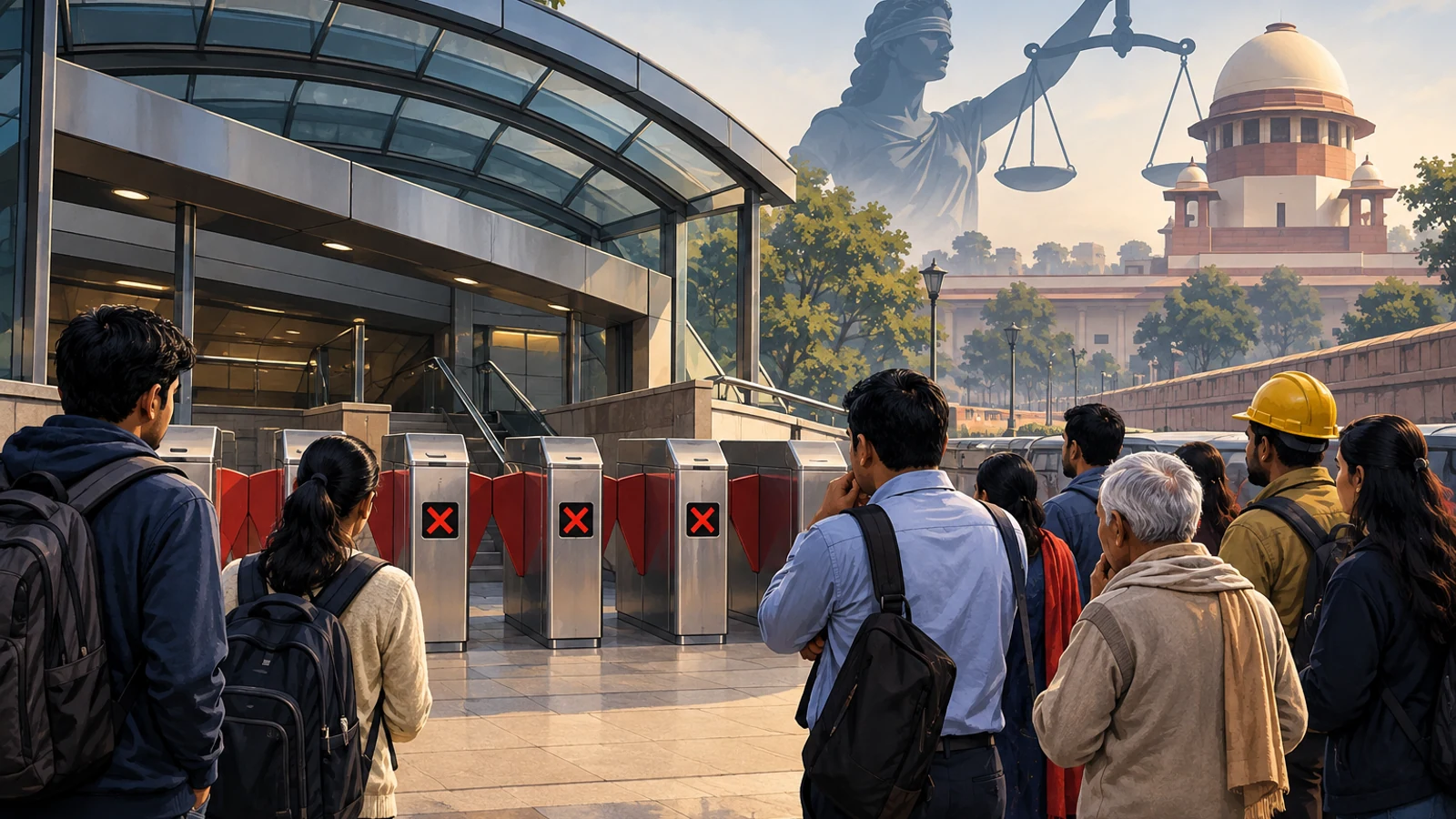
The Supreme Court on October 9 urgently heard a challenge to the planned closure of entry and exit gates at 57 Delhi Metro stations and reported train cancellations ahead of an October 10 protest. A bench led by Chief Justice Surya Kant, with Justices Joymalya Bagchi and V. Mohana, expressed serious concern and asked the government to take corrective steps so public transport would not be completely stopped. The hearing produced an interim direction on commuter access, not a final ruling on the protest or the underlying election-related allegations.
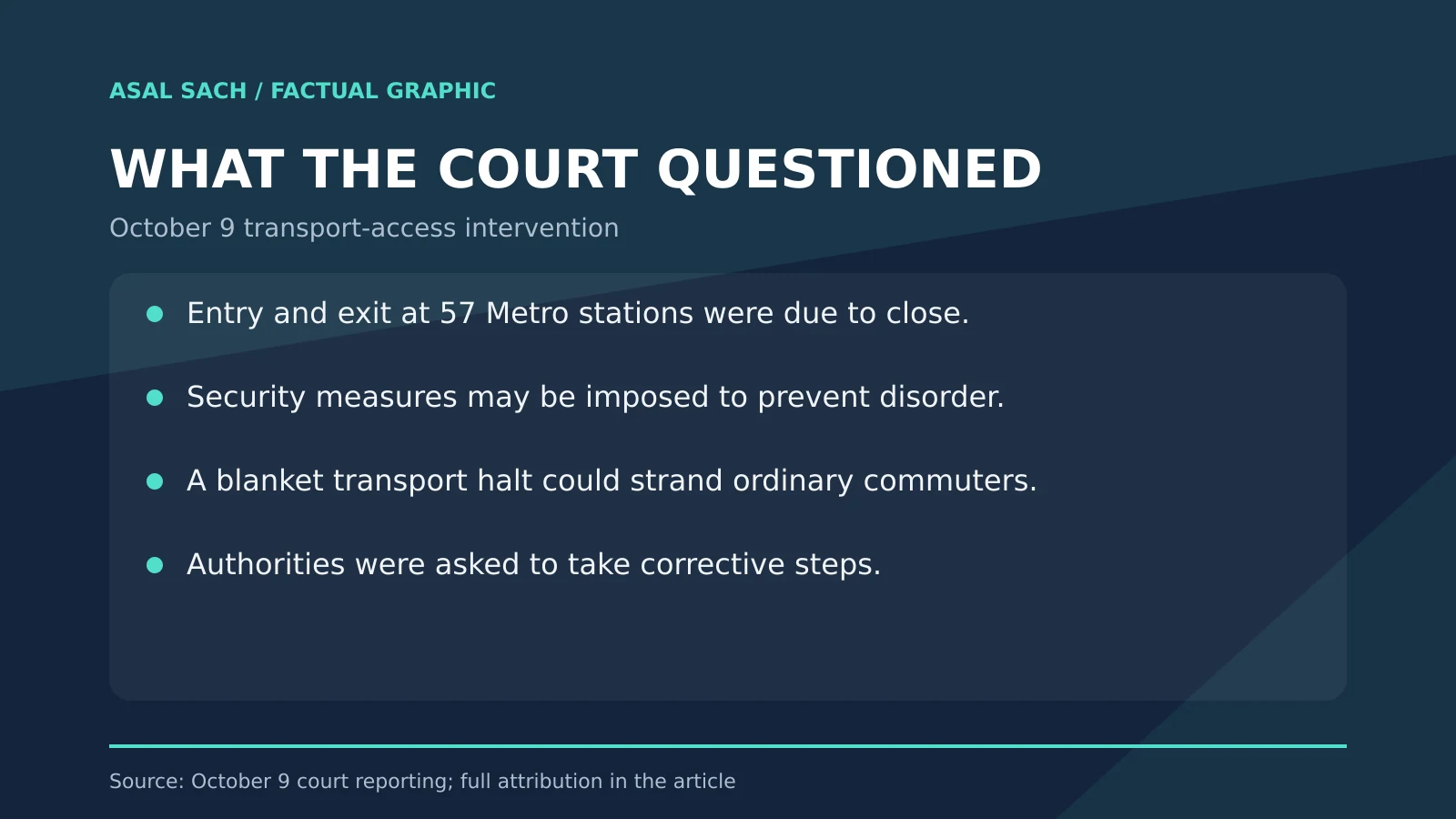
The court said police and other authorities may take preventive or regulatory measures against disorder, but ordinary residents remain entitled to use public transport. The bench referred to students, employees and senior citizens travelling from Gurugram, Greater Noida and different parts of Delhi, and questioned why a blanket transport restriction should leave them without a practical way to travel.
Delhi Metro Rail Corporation had announced that entry and exit at 57 stations would close from 9 p.m. on October 9 until further notice, while interchange would continue at most affected stations except New Delhi. Police material cited security concerns and the possibility of unlawful gatherings around the planned demonstration. The court did not say authorities must abandon security planning; it questioned whether the response was proportionate and whether targeted restrictions could replace a sweeping shutdown.
Solicitor General Tushar Mehta told the bench that the government was not seeking a total shutdown and would review the directive. The court asked the Centre and the concerned authorities to ensure that Metro and train services were not completely stopped and that commuters were not put to unnecessary difficulty. At the publication cutoff, the available reports described oral observations and an urgent corrective direction; a detailed final written judgment on the broader dispute was not available.
The planned Jantar Mantar demonstration is being organised by Citizens for Justice and Peace, youth groups and opposition-linked organisations demanding the resignation of Chief Election Commissioner Gyanesh Kumar over the Special Intensive Revision of electoral rolls. Delhi Police had denied permission for the gathering. Claims that the revision caused mass wrongful deletions remain allegations by political and civil-society groups; the Election Commission says the disputed figures concern draft flagged entries and that eligible voters have routes to seek correction or re-enrolment.
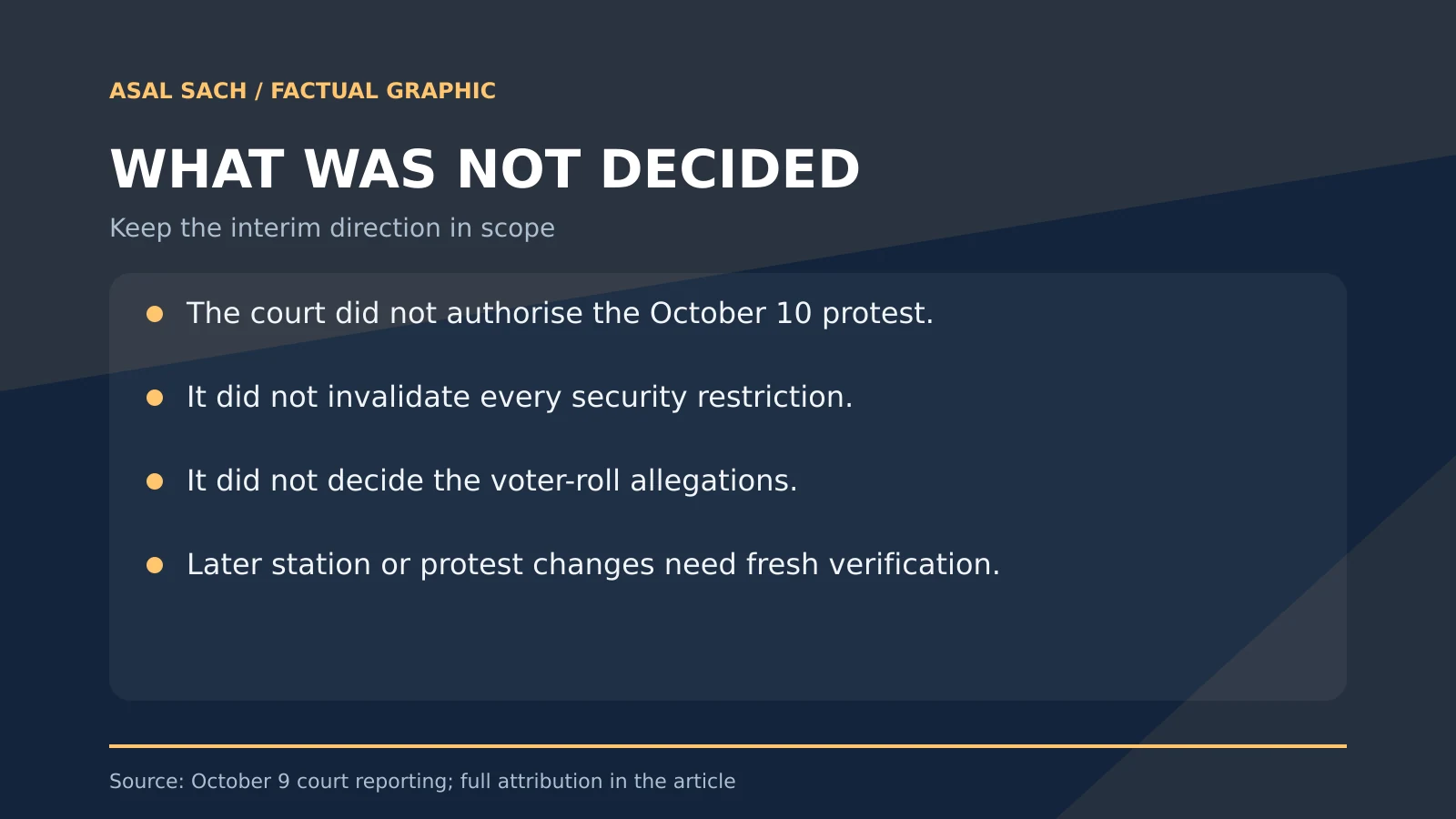
The verified new development is the Supreme Court’s intervention on proportionality and access to public transport. It does not amount to permission for the October 10 protest, a finding that all security restrictions are unlawful, or a ruling that voter-roll manipulation occurred. Any later change in station operations, the protest’s status or the written terms of the court’s order requires separate verification.