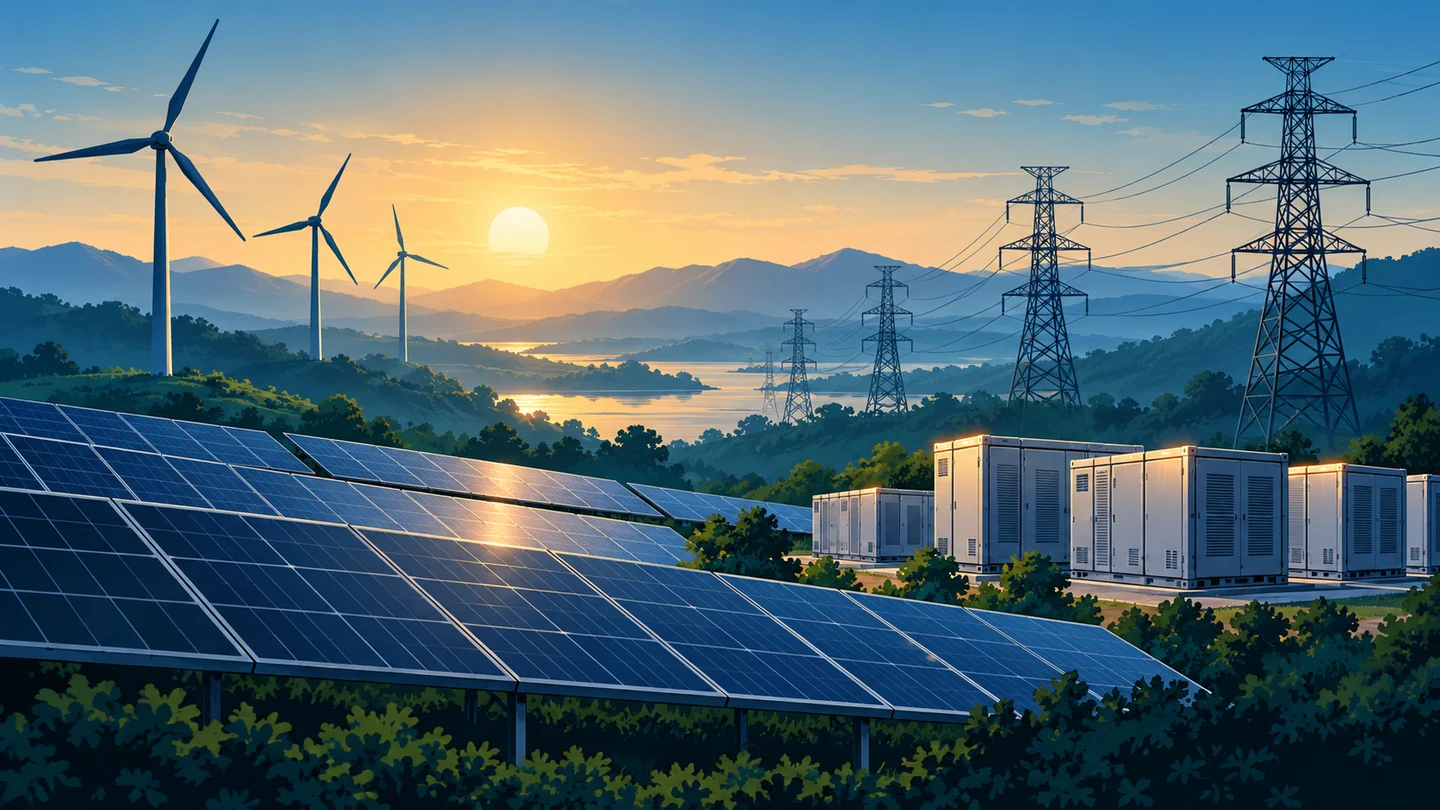
The Union Cabinet approved Green Energy Corridor Phase III on September 30, combining stronger transmission networks within states with battery storage for renewable electricity. The official release sets a target of integrating up to 135 gigawatts of renewable power and deploying 50 gigawatt-hours of battery storage by financial year 2032–33.
The programme carries ₹54,082 crore in central financial support. Money9’s September 30 report confirms that the batteries can be installed at renewable-generation facilities or other important points on the grid. Their purpose is to manage variable output and help meet demand when solar generation is unavailable. The capacities are planned additions, not equipment already operating.
According to the Cabinet release, state transmission utilities will oversee implementation. New transmission projects will use competitive bidding based on tariffs, while upgrades to existing networks will follow a cost-plus framework. The Better Andhra’s September 30 report independently describes the same delivery arrangements and storage provision.
The government expects central assistance to reduce the burden of transmission charges and support its wider non-fossil energy goals. Those are projected benefits. Approval alone does not establish completed lines, lower household bills or measured emissions reductions. Construction, procurement and operation of the approved infrastructure remain necessary before those outcomes can be assessed.