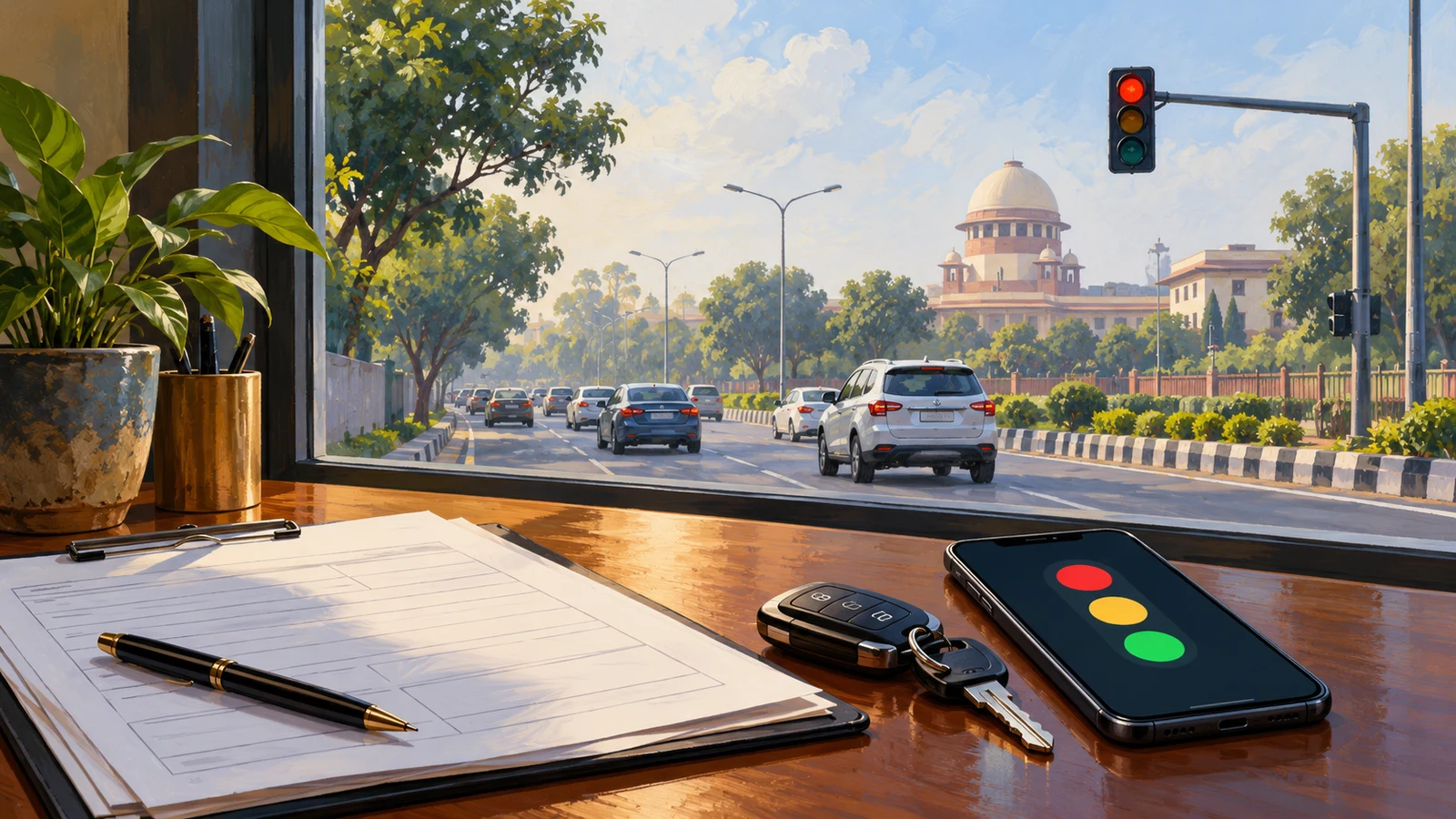
A Supreme Court order made public on October 1 directs states and Union Territories to restrict vehicle-related services when traffic e-challans remain unpaid. The written record is dated September 28 in S. Rajaseekaran's long-running road-safety case; October 1 is its disclosure date, not a new hearing.
Justices J. B. Pardiwala and K. V. Viswanathan directed authorities to withhold registration renewals, duplicate registration certificates, address updates and fitness certificates for affected vehicles. The order also calls for Parivahan blacklisting, blocked ownership transfers and withholding pollution-under-control certificates. Licence-renewal restrictions and suspension measures are specified for multiple violations.
The bench ordered random vehicle checks and necessary steps to impound vehicles where issued e-challans had not been honoured. Separately, states and Union Territories must implement the Road Transport Ministry's October 2025 standard operating procedure for electronic road-safety enforcement.
The frequently reported suggestion of recovering traffic fines through electricity bills does not appear in the written order. Moneycontrol and IANS clarified on October 1 that this was an oral proposal during the earlier hearing. It should not be presented as an operative electricity-billing rule.
The directions require action by transport and enforcement authorities. Publication of the order does not by itself establish that every state has already applied each restriction; implementation remains the next factual check.